

Key Takeaways
- Salary Threshold Risk: Completing five years in the UK does not automatically make you eligible for ILR. You must also meet the correct salary threshold at the date of application.
- Not One Fixed Figure: The ILR salary requirement is not the same for every Skilled Worker. It depends on your occupation code, its going rate, the type of job, and whether you were first granted Skilled Worker permission before 4 April 2024. The general figure is £41,700 a year, with lower figures of £33,400, £31,300 and £25,000 for specific groups, and you must also meet the going rate.
- Different Cohorts, Different Rules: Skilled Worker visa holders fall into different salary cohorts depending on when they entered the route, which means two people in similar roles may face different ILR salary requirements.
- Last-Minute Refusal Risk: Many applicants only realise shortly before applying that their salary does not meet the required threshold, putting their settlement plans at risk.
- SOC Code Is Crucial: Your Standard Occupational Classification code plays a central role in determining the going rate for your job and the salary level you must meet for ILR.
- Early Checks Matter: Checking your ILR eligibility three to five months before you apply gives you time to identify salary gaps, speak to your employer, and fix issues before it is too late.
Introduction
Applying for Indefinite Leave to Remain (ILR) is one of the most important milestones for Skilled Worker visa holders in the UK. After years of living and working in the country, ILR allows you to settle permanently, work freely, and eventually apply for British citizenship.
However, many applicants are now discovering a serious issue right before submitting their ILR application: they do not meet the required salary threshold.
At WorkPermitCloud, we are seeing an increasing number of Skilled Worker visa holders ready to apply for ILR, only to realise their salary does not meet the Home Office requirement. Unfortunately, if the minimum salary requirement is not met, you cannot apply for ILR, even if you have completed the required five-year qualifying period.
The challenge is that the salary requirement is not a single fixed number. It depends on several factors, including your SOC (Standard Occupational Classification) code, the going rate for your job and when you were first granted permission as a Skilled Worker.
This guide breaks down the salary rules for settlement, helping you identify exactly what you need to earn to secure your future in the UK.
Why the Salary Threshold is a 'Trap' for Many Applicants
The trickiest part of the UK immigration system is that the required salary for ILR is not a single, flat rate for everyone. It is highly individualised.
The UK immigration rules have undergone significant changes in recent years, particularly after the major Skilled Worker reforms in 2024 and 2025.
Because of these changes, different groups of migrants are subject to different salary rules depending on when they first entered the Skilled Worker route.
This means two people working in similar roles may have completely different salary requirements for ILR, simply because they were first granted Skilled Worker permission at a different time.
That means your required salary depends entirely on two crucial factors:
- Your specific SOC (Standard Occupational Classification) code: The official classification of your job role.
- The date you were first granted Skilled Worker permission: The Home Office applies lower salary figures to people granted permission under the rules in place before 4 April 2024 who have held Skilled Worker permission continuously since.
Understanding which cohort you fall into is therefore essential before applying for settlement.
The biggest mistake applicants make is assuming their current salary is sufficient simply because it met the requirements when they first applied for their Skilled Worker visa. By the time they realise the threshold has increased for their ILR application, it is often too late to negotiate a pay rise with their employer.
At settlement your salary must meet two tests at once: the general figure for your row in the table below, and the going rate for your occupation code. Going rates are based on a 37.5-hour week and are adjusted for your hours. Only pay from your sponsored job counts, and only the first 48 hours a week count towards the general figure. The new entrant and PhD discounts that can apply to a visa application do not apply at settlement.
The Four Salary Cohorts: Which One Are You In?
To make the Home Office guidelines easier to understand, we have divided Skilled Workers into four distinct cohorts. Finding out which cohort you belong to is the first step in calculating your ILR salary requirement.
| Cohort | Who is Included | Salary Threshold Implications | Dependants Allowed? |
| Cohort 1 | Care workers and senior care workers employed by an eligible employer, such as a provider registered with the Care Quality Commission. | At least £25,000 a year and the going rate, which is also £25,000 (£12.82 an hour). | Only if you were granted Skilled Worker permission as a care worker or senior care worker under the rules in force before 11 March 2024 and have been sponsored in those roles continuously since. |
| Cohort 2 | All other Skilled Workers first granted permission under the rules in place before 4 April 2024, with continuous Skilled Worker permission since. | At least £31,300 a year and the lower going rate for the occupation code. At least £25,000 and the lower going rate if the job is on the Immigration Salary List. | Dependants are allowed. |
| Cohort 3 | Skilled Workers first granted permission under the rules in force from 4 April 2024 to 21 July 2025. | At least £41,700 a year and the going rate. At least £33,400 and the going rate if the job is on the Immigration Salary List. No new entrant discount at settlement. | Allowed. For jobs below degree level (RQF 3 to 5), only where you were granted permission under the rules in force before 22 July 2025 and have been sponsored in those jobs continuously since. |
| Cohort 4 | Skilled Workers first granted permission under the rules in force from 22 July 2025: RQF 6+ roles, or RQF 3 to 5 roles on the Immigration Salary List (ISL) or Temporary Shortage List (TSL). | At least £41,700 a year and the going rate. At least £33,400 and the going rate if the job is on the Immigration Salary List. | Dependants allowed only for RQF 6+ roles. |
Two more rows apply whatever your cohort. If your job is in a health or education occupation code paid on a national pay scale, such as nurses, doctors and teachers, you need at least £25,000 a year and the national pay scale rate for your role. If part of your five years was spent as a Tier 2 (General) migrant sponsored in certain research and higher education teaching occupation codes, you need at least £25,000 a year and the going rate. The pre-4 April 2024 figures in Cohort 2 apply to applications made before 4 April 2030. Our Indefinite Leave to Remain and Settlement guide explains the settlement salary alongside the other requirements you must meet.
Understanding Your Cohort's Impact
Whether you fall into Cohort 1 as a Senior Carer or Cohort 4 in an RQF 6+ role, your financial requirement is completely different. Furthermore, your cohort dictates whether your partner and children are eligible to remain as your dependants, making it vital to plan not just for yourself, but for your family.
When Should You Check Your ILR Eligibility?
Our advice is simple: Check your eligibility early. You should ideally begin assessing your ILR requirements three to five months before you plan to apply. Checking early gives you ample time to identify any shortfalls in your salary and have a proactive conversation with your employer. It also provides a buffer to resolve complex issues, such as calculating absences from the UK or ensuring your English language qualifications are up to date.
Waiting until your visa is weeks away from expiring leaves you with no room to correct mistakes.
Conclusion
Securing your Indefinite Leave to Remain should be a time of celebration, not stress. By understanding the settlement salary thresholds and identifying your specific cohort early, you can confidently prepare an application that meets all Home Office requirements. Do not let a misunderstood salary rule jeopardise your future in the UK. Take the time to verify your details today, speak with your employer, and reach out to immigration professionals if you are unsure about any aspect of your eligibility. Your permanent life in the UK is well within reach!
How Can WorkPermitCloud Help?
Navigating the shifting landscape of UK immigration can be daunting, but you do not have to do it alone. At WorkPermitCloud, we meticulously assess your specific cohort, SOC code, and salary requirements well in advance to ensure your ILR application is flawless.
Use Our Free ILR Eligibility Calculator
https://www.workpermitcloud.co.uk/tool/ilr-eligibility-calculator
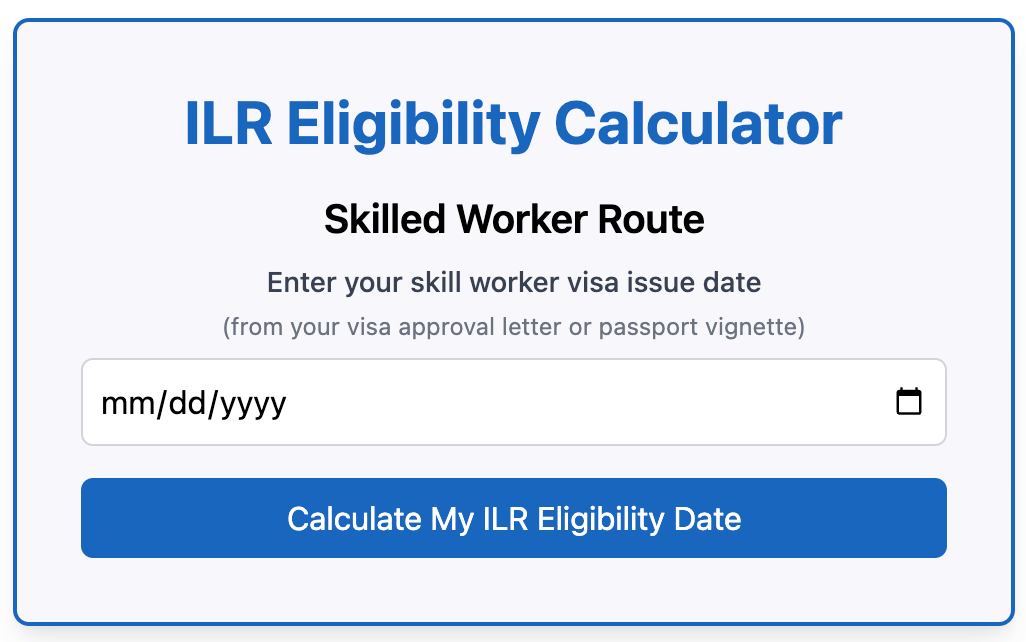
Whether you need help confirming your salary threshold, managing complex absences, or ensuring your spouse's eligibility, our expert team is ready to guide you and your employer through the entire process, preventing costly last-minute problems.
📞 Call us: +44 020 8087 2343
📧 Email: info@workpermitcloud.co.uk
📅 Contact form: https://www.workpermitcloud.co.uk/contact
Glossary
| Term | Definition |
| ILR (Indefinite Leave to Remain) | Settlement status that allows you to live, work, and study in the UK permanently without any time restrictions. |
| SOC Code (Standard Occupational Classification) | The official national system used by the Home Office to classify and categorise specific job roles and their required skill levels. |
| CoS (Certificate of Sponsorship) | A mandatory electronic document issued by your licensed employer proving you have a valid job offer in the UK. |
| RQF (Regulated Qualifications Framework) | The national system used to measure the educational and skill level of a job role, with RQF 6 representing a degree-level position. |
| Going Rate | The minimum standard salary set by the Home Office for your specific profession or SOC code. |
| ISL (Immigration Salary List) | A government list of specific job roles where the UK faces a significant shortage of workers, which sometimes allows for reduced salary thresholds. |
| TSL (Temporary Shortage List) | A time-limited list of jobs below degree level that can still be sponsored on the Skilled Worker route. |