
- Key Takeaways
- Introduction: A New Era of EU Border Checks
- What is the Entry/Exit System (EES)?
- When Does EES Start and How Will It Be Rolled Out?
- Who Does EES Apply To, and When Does It Start?
- How the EES Works at the Border
- EES Checkpoints
- Impact on UK Travellers and Businesses
- EES vs. ETIAS: What's the Difference?
- Tips for Travelling Smoothly Under EES
- Employer Considerations: Business Travellers & Compliance
- How Can WorkPermitCloud Help?
- Conclusion
- Glossary
- Frequently Asked Questions
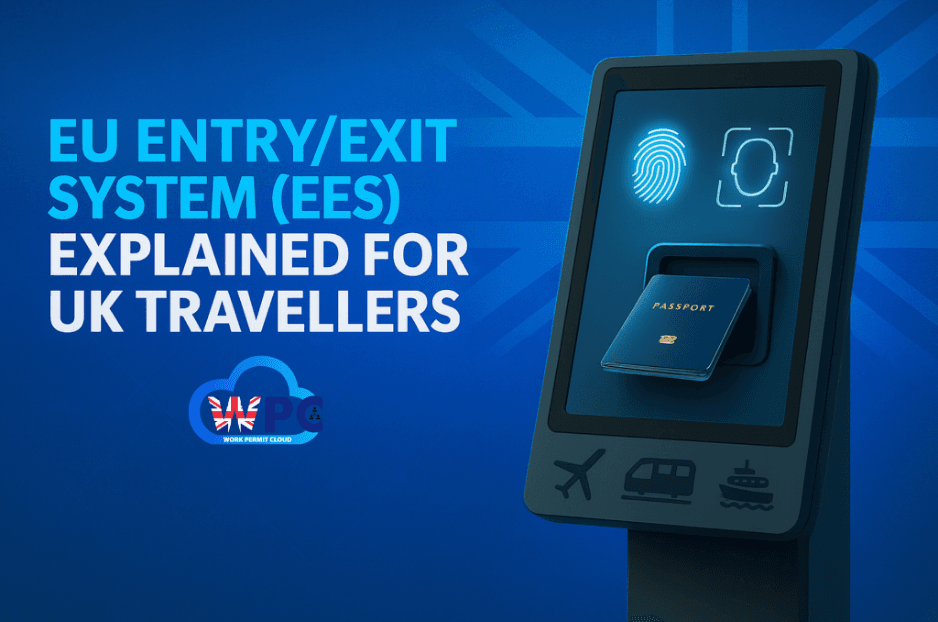
Key Takeaways
⧁ The EU's new Entry/Exit System (EES) starts on 12 October 2025, with a phased rollout until it is fully operational by April 2026.
⧁ It applies to all UK citizens travelling to the Schengen Area for short stays, replacing manual passport stamps with an automated, digital record.
⧁ Your first entry will require biometric registration, including a facial image and fingerprints, which is stored for three years.
⧁ The system automatically tracks your stay against the 90/180-day rule, making overstays easy to detect and leading to potential fines or entry bans.
⧁ Expect initial delays at borders; allow extra time for your journeys, especially through major hubs like Eurostar, Eurotunnel, and Dover.
⧁ EES is different from ETIAS, which is a separate pre-travel authorisation required from 2026.
⧁ Employers must proactively track employee travel to the EU to manage compliance risks and avoid operational disruptions.
Introduction: A New Era of EU Border Checks
Travel to the European Union (EU) and the wider Schengen Area is changing for UK citizens. From 12 October 2025, the European Union will launch the Entry/Exit System (EES), a new digital border management system set to replace the familiar manual stamping of passports.
This change is a significant step in the EU's move towards stronger digital border security and a more consistent approach to tracking short-stay visits. For you—the UK traveller or a business managing international staff—the EES means a fundamental shift in how your time in Europe is monitored and enforced. For British travellers, whether you’re heading to Spain for a family holiday or visiting France on business, your movements will now be logged electronically, and overstays will be automatically detected.
While the long-term goal is to streamline border crossings, the initial rollout is expected to bring challenges. This comprehensive guide will explain exactly what the EES is, how it works, its impact on you, and, crucially, how you can prepare to ensure a smooth journey.
What is the Entry/Exit System (EES)?
The EES is a new, automated system designed to record the entry and exit of non-EU travellers every time they cross an external Schengen border.
Key Facts About EES:
● Digital Tracking:
It replaces the traditional passport stamp with a digital record, storing the date and location of entry and exit.
● Biometric Data:
The system will capture and store biometric information, specifically a facial image and four fingerprints, upon a traveller’s first registration.
● Automated Monitoring:
The EES automatically calculates and tracks a traveller's compliance with the '90 days in any 180-day period' rule for visa-free short stays in the Schengen Area.
The primary objectives of the EES are to enhance internal security, reduce illegal migration, and ensure that travellers do not overstay their permitted short-stay allowance.
When Does EES Start and How Will It Be Rolled Out?
The EES is scheduled to begin its rollout on 12 October 2025.
It's crucial to understand that this will not be an overnight switch across all borders. A phased implementation is planned to allow authorities to integrate the new technology smoothly. You may find that some airports or border crossings adopt the system before others.
The EU aims for the EES to be fully operational at all external air, sea, and land borders by April 2026. During this transitional period, travellers should be prepared for potential inconsistencies and delays.
Who Does EES Apply To, and When Does It Start?
Applicability: UK Citizens are Included
The EES applies to all "third-country nationals"—which includes UK citizens following Brexit—who are travelling to the Schengen Area for a short stay (up to 90 days in a 180-day period).
The EES does NOT apply to:
● EU citizens and nationals of Schengen-associated countries.
● UK nationals who also hold an EU/Schengen country passport (as long as they travel on the EU passport).
● Non-EU nationals who hold a long-term visa (Type D) or a residence permit issued by a Schengen state.
● Cruise passengers whose journey starts and ends outside the Schengen area
Important notes:
● Children:
Those under the age of 12 will typically be exempt from providing fingerprints, but their travel will still be recorded in the EES.
● Dual Citizens:
If you hold both a UK and an EU passport, you should use your EU passport to travel within the Schengen Area to avoid EES registration.
How the EES Works at the Border
The EES process is split into an initial registration and subsequent visits.
First Registration (Biometric Enrolment)
The first time you enter the Schengen Area after the EES launch, you will undergo a digital registration process:
- Passport Scan: Your passport will be scanned.
- Biometric Capture: Your facial image and four fingerprints will be taken.
- Answer Questions: A border guard may ask routine questions about the purpose and duration of your stay.
- Data Storage: This information, along with your entry date and location, will be stored in the EES central database for up to three years (or five years if an overstay is recorded).
Subsequent Visits
Once registered, future border crossings should be faster. You will typically only need to scan your passport and provide a fingerprint or facial scan for verification, as your biometric data will already be on file.
Exiting the Schengen Area
On your departure, you must present your passport again for scanning. This electronically logs your exit, ensuring your travel record is accurate and your remaining days under the 90/180-day rule are calculated correctly.
EES Checkpoints
Depending on your mode of transport, the check will occur at different points:
| Mode of Travel | EES Check Location |
| Air Travel | On arrival at your destination airport in the Schengen Area. |
| Ferry (excl. Dover) | On arrival at your destination port in the Schengen Area. |
| Eurotunnel (Folkestone) | Before departure at the purpose-built pre-registration area in the UK. |
| Eurostar (St Pancras) | Before departure at self-service kiosks in the UK terminal. |
| Port of Dover | Before departure at the Western Docks processing area in the UK. |
Impact on UK Travellers and Businesses
For Individual Travellers
● Stricter Enforcement of the 90/180-Day Rule:
The EES eliminates the flexibility sometimes afforded by manual passport stamps. Overstays will be automatically flagged, leaving little room for discretion. This could lead to serious penalties, including fines or a refusal of entry on future trips.
● Initial Delays:
In the early months, expect longer queues and processing times, especially at key transport hubs, while border staff and travellers adjust to the new technology and biometric capture procedures. Factor in extra time for your journey.
● Preparation is Key:
Ensure your passport is valid and machine-readable. Have supporting documents (e.g., accommodation details, proof of return travel) ready, as officials may request them.
For Employers and Business Travellers
The automatic tracking feature of the EES has major compliance implications for businesses with staff travelling frequently into the Schengen Area:
● Increased Compliance Risk:
Employers now face a heightened risk of non-compliance if staff breach the 90/180-day rule. Even minor overstays will be recorded and enforced.
● Strategic Planning:
Global mobility teams must proactively plan and track employee travel itineraries to prevent breaches.
● Potential Disruptions:
Businesses should prepare for potential operational disruptions due to border delays, which could affect business meetings, client visits, and project timelines.
EES vs. ETIAS: What's the Difference?
The EES is often confused with the European Travel Information and Authorisation System (ETIAS), but they are separate systems:
| System | Purpose | When to Apply/Action |
| EES | Border Management: Records entries/exits and stores biometrics. Replaces passport stamps. | No application. Registration happens automatically at the border on arrival. |
| ETIAS | Pre-Travel Authorisation: A mandatory security check for visa-exempt visitors (like UK citizens) before departure. | Application required online before travel (expected launch in 2026). A small fee will apply. |
In the near future, UK travellers will need to comply with both the EES border checks and secure a valid ETIAS authorisation before travelling.
Tips for Travelling Smoothly Under EES
To minimise stress when travelling after October 2025:
● Check passport validity –
Must be machine-readable and valid for at least 6 months.
● Arrive early –
Allow extra time for border checks, especially during the transition phase.
● Stay organised –
Keep your accommodation details, return ticket, and proof of funds accessible.
● Avoid dual passport errors –
Always use the same passport for both entry and exit.
● Track your Schengen days –
Even though the EES tracks for you, keep a personal record for peace of mind.
Why the EU Is Introducing EES
According to the EU and UK government, EES is part of a broader digital transformation aimed at:
● Enhancing border security
● Preventing overstays and illegal migration
● Speeding up legitimate travel through automation
In the long term, EES should make travel more efficient, but UK authorities have already allocated millions of pounds to help ports and operators prepare for the change.
Employer Considerations: Business Travellers & Compliance
If your organisation sends staff to Europe for meetings, training or short projects, the EES introduces new compliance risks.
Employers should:
● Track staff movements to ensure compliance with the 90-day rule
● Update internal travel and HR policies
● Communicate possible border delays to clients and partners
● Provide training or digital tracking tools for frequent travellers
Failure to manage these properly could result in overstays, future entry bans, or visa complications.
How Can WorkPermitCloud Help?
At WorkPermitCloud Ltd, we help UK employers and professionals stay compliant with changing immigration rules — in the UK and beyond.
Our HR and immigration compliance tools make it easy to track visa limits, and manage workforce mobility. Whether you’re an employer with frequent European travellers or an individual concerned about immigration rules, our experts can help you stay ahead of compliance changes.
📞 Call us: +44 020 8087 2343
📧 Email: info@workpermitcloud.co.uk
📅 Book a free consultation: calendly.com/lutfur-workpermitcloud
Conclusion
The new EU Entry/Exit System (EES) represents a major shift in how UK travellers will experience European borders. Although it may initially cause longer queues and confusion, the system ultimately promises more consistent and secure travel.
By understanding how EES works — and preparing early — both travellers and businesses can avoid disruptions and stay compliant with European immigration rules.
For tailored guidance, contact WorkPermitCloud Ltd today and make sure you’re travel-ready before the new rules take effect in October 2025.
Glossary
| Term | Definition |
| Entry/Exit System (EES) | The EU's new digital system that electronically records the entry, exit, and biometric data of non-EU travellers crossing external borders. |
| Schengen Area | A zone of 29 European countries that have abolished internal border controls, requiring unified external border management. |
| Third-Country National | A person who is not a citizen of an EU or Schengen state, which includes UK citizens following Brexit. |
| 90/180-Day Rule | The maximum duration a third-country national can stay in the Schengen Area is 90 days within any rolling 180-day period without a long-stay visa or residence permit. |
| Biometric Data | Personal physical characteristics, specifically fingerprints and a facial image, captured and stored by the EES for identity verification. |
| First Registration | The traveller's initial, mandatory EES enrolment when their biometric data and passport details are first captured and stored in the central database. |
| Overstay | Remaining in the Schengen Area beyond the permitted 90-day short-stay limit, which the EES automatically detects and flags. |
| ETIAS | European Travel Information and Authorisation System; a mandatory pre-travel security clearance, similar to the US ESTA, expected to launch in late 2026. |
| Type C (short-stay) visa | Schengen visa for visits up to 90 days in any 180-day period; travellers with this visa are also processed under EES. |
| Long-Term Visa (Type D) | A national visa issued by a Schengen state allowing stays over 90 days, typically for work, study, or residence, which exempts the holder from EES short-stay tracking. |
| Juxtaposed Controls | Border checks (e.g., French checks at UK ports like Eurostar/Dover) where the EES will be implemented before the traveller leaves the UK. |
